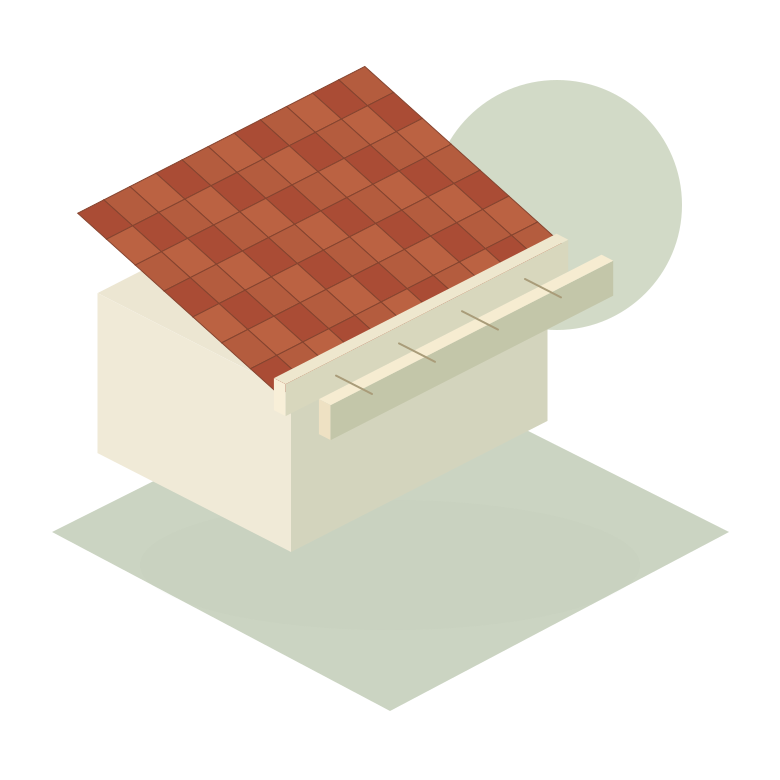
Identify the soffit problem
Loose panels, open gaps and deteriorated boards can make the eaves look unfinished and warrant assessment. Record where the problem appears from a safe position. Check whether fascia damage or roof-space moisture has been noticed at the same time.
Understand the ventilation role
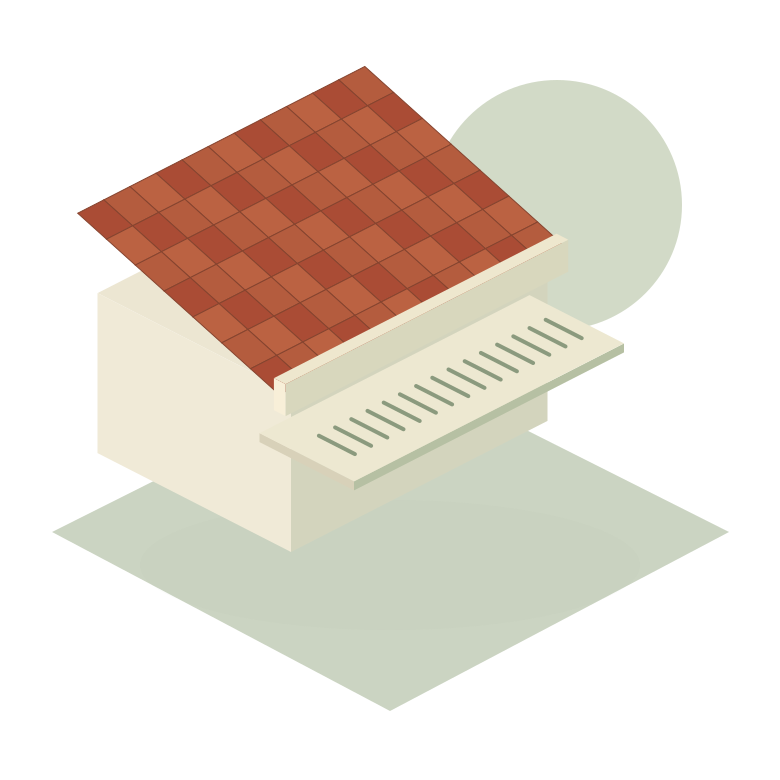
Some roof designs use ventilation at the eaves. The required arrangement depends on the complete roof build-up, so visible holes are not a universal specification. New soffit work should preserve or provide the ventilation appropriate to that design.
Choose a repair or renewal approach
Local repairs may be possible where adjoining components remain suitable. Replacement raises material, appearance and fixing choices. Ask how the proposed panels and joints relate to the existing roof rather than selecting solely by the visible finish.
Define the work at the eaves
Clarify fascia interfaces, gutter access and any associated work at the eaves. Where underlying timber or moisture issues are found, they need their own assessment. A quotation should distinguish soffit work from wider insulation or roof repairs.
Prepare a soffit enquiry
Provide safe photographs and mention any condensation or recent insulation changes. Describe the affected elevations and whether damage is isolated. Those details help connect the visible panel problem to the wider roof condition.
Your questions, answered.
Do all soffits need ventilation openings?+
The appropriate ventilation depends on the roof design. Do not assume every roof needs the same soffit detail.
Can soffits be replaced without changing the fascia?+
Sometimes. The condition and compatibility of adjoining components determine whether separate work is practical.
Could blocked eaves ventilation contribute to roof moisture problems?+
It can, where the roof relies on that ventilation. Moisture symptoms need assessment in the context of the whole build-up.