
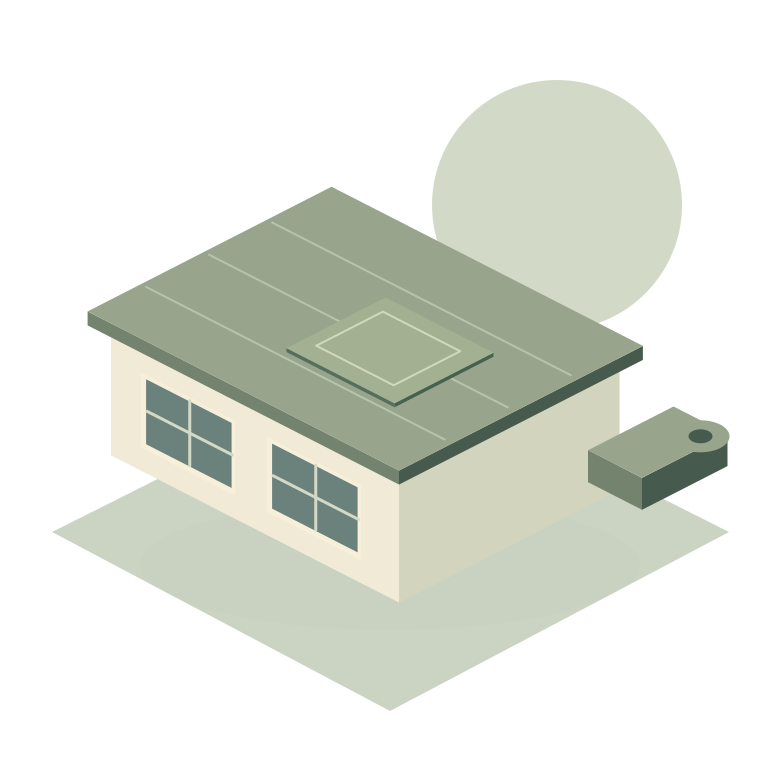
Describe the change you have noticed
Record what has changed: water indoors, a damaged edge, a visible split or water collecting after rain. Note whether the problem is new or recurring. Photographs from a safe position and previous repair details help establish the history.
Choose the assessment route
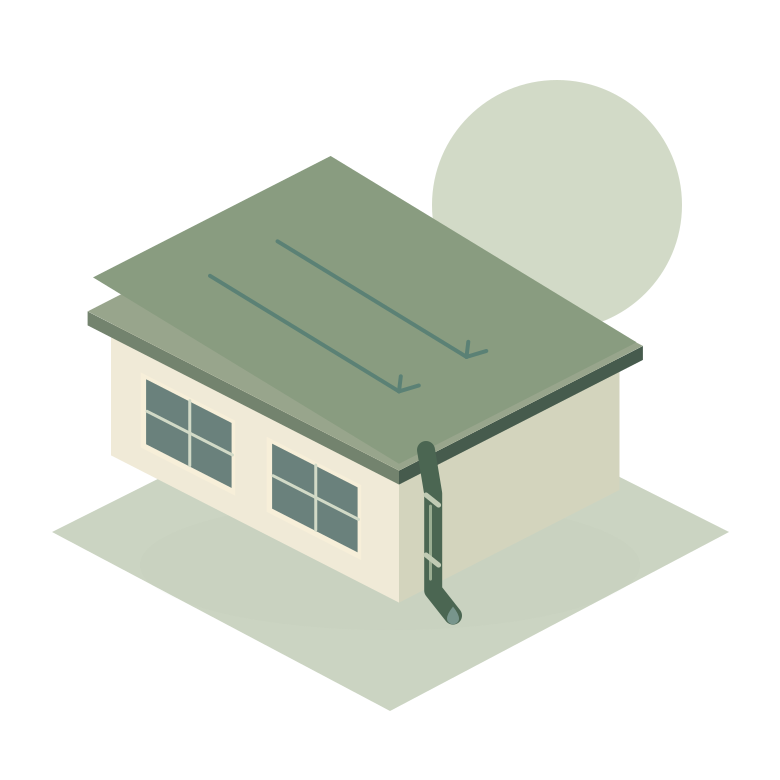
Repair focuses on a defined local defect. Replacement considers the condition of the wider roof build-up. Drainage assessment looks at water movement, outlets and falls. More than one may be relevant, but they should not be treated as interchangeable answers to every symptom.
Why the whole roof needs context
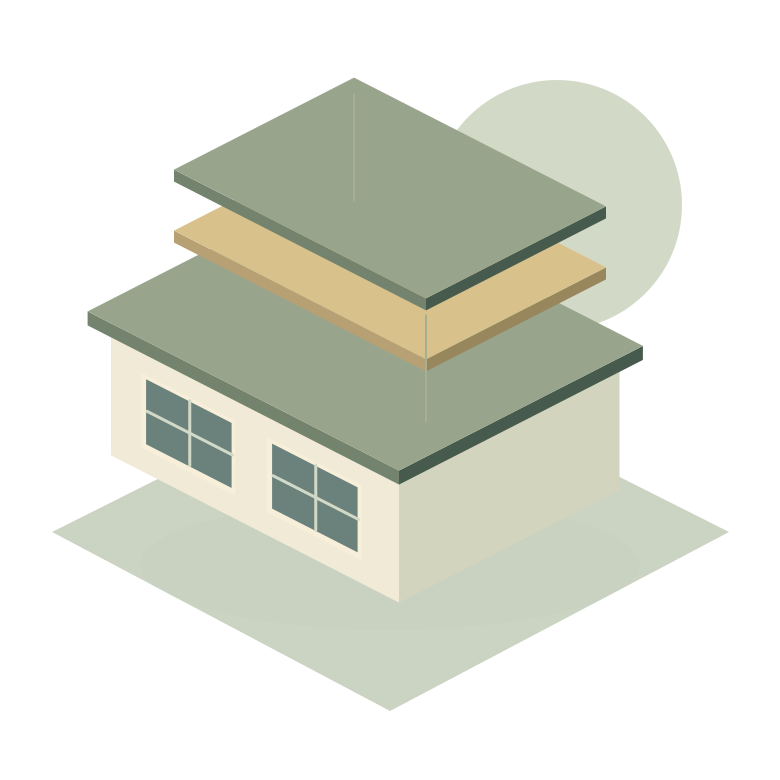
The covering sits over a deck and other layers that may be concealed. Their condition can limit repair or overlay options. Insulation and roof use also matter, especially over occupied rooms where moisture and thermal requirements need coordination.
Prepare the next step
You do not need to identify the material with certainty before making an enquiry. Describe the roof, the space below it and the symptoms. Ask which findings support the proposed work and what could only be confirmed after opening up.
Your questions, answered.
Can drainage problems be corrected without replacing the roof?+
Sometimes. Obstructions or local outlet faults may be addressed separately; changes to falls can involve wider work.
Does an old flat roof automatically need renewal?+
No. Condition and the cause of problems matter more than age alone.
What if I do not know the covering material?+
Provide safe photographs and describe what you know. Identification can form part of the assessment.