Is replacement the right route?
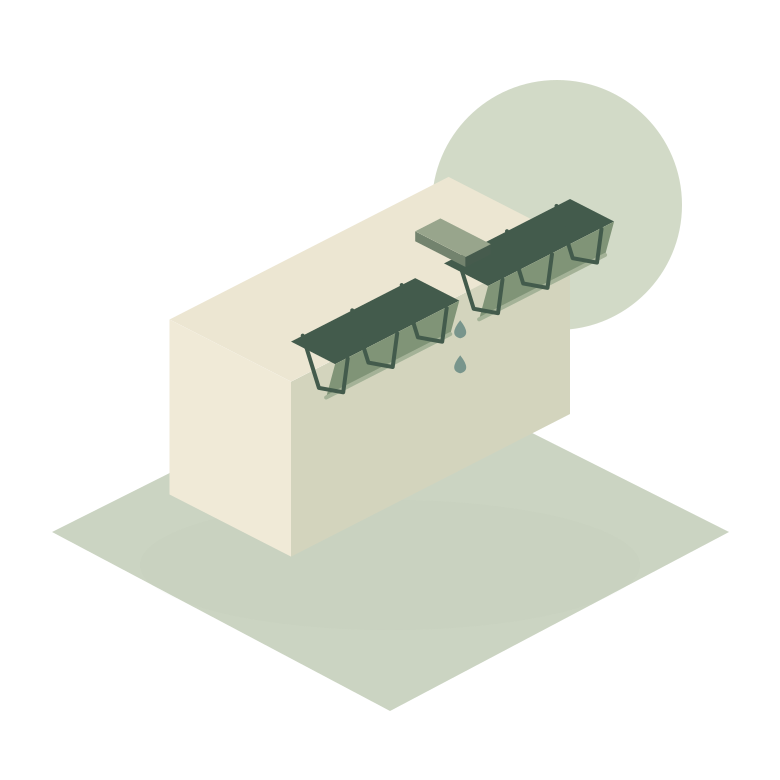
Widespread deterioration or repeated faults can make replacement worth considering. Local damage may still suit repair. Establish which runs are affected and why the existing arrangement is no longer suitable before defining a whole-property renewal.
Choose suitable guttering
Material, profile and appearance are part of the choice. Roof area, outlet arrangement and the intended water flow also matter to specification. On a traditional property, discuss how the new guttering will relate to existing details and character.
Review outlets and supports
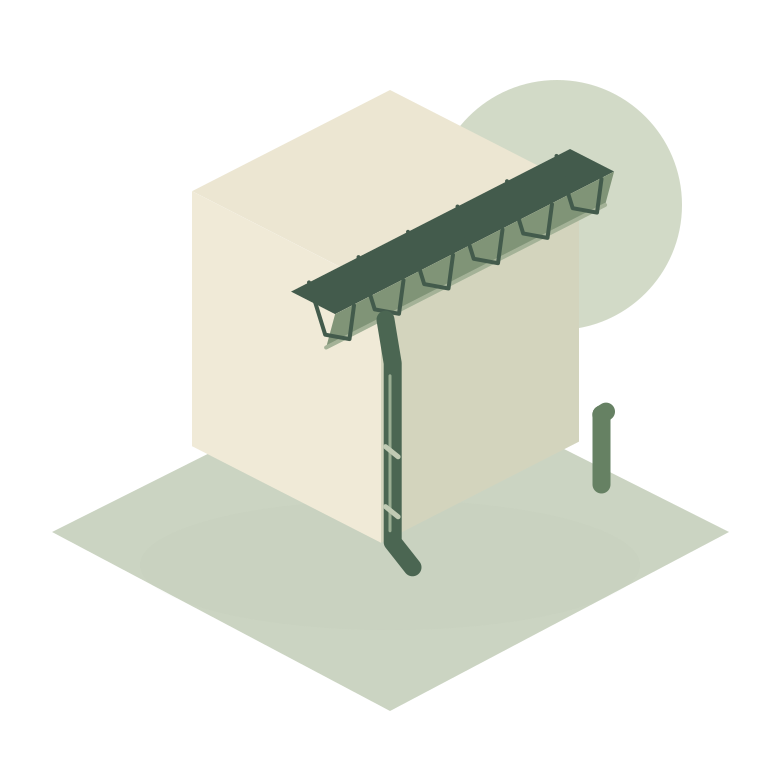
New gutters need suitable supports and a workable connection to downpipes. Check fascia condition and the location of outlets. If adjoining components remain, explain how compatible transitions will be made rather than leaving them as an installation-day assumption.
Define the replacement scope
The quotation should identify removal, replacement runs, outlets, brackets and connections. Clarify access, waste handling and any associated fascia work. Partial replacement should state where retained sections begin and how the joint will be formed.
Prepare your guttering enquiry
Provide photographs of the affected elevations and describe what the current guttering does during rain. Explain preferences about appearance and whether wider roofline work is planned. Compare equivalent scopes rather than length of gutter alone.
Your questions, answered.
Should gutters and downpipes be replaced together?+
Not always. Retained downpipes must be suitable and compatible with the proposed collection and outlet arrangement.
Can I change the gutter profile or material?+
Potentially. Suitability, appearance and any property constraints should be checked before selection.
Will the fascia need replacing before new gutters are fitted?+
Only where its condition or suitability requires work, but it should be assessed before new supports are specified.